
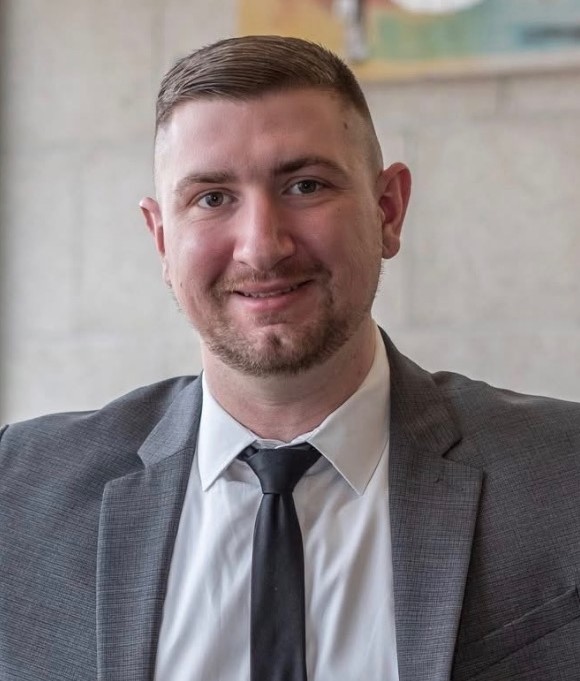
Nic Cravillion
District director, Office of state Sen. Andre Jacque; Wisconsin Army National Guard; small business owner
 Republican
 New Franken


Elected Experience
None
Q&A with the Candidate
Why should voters elect you?
I'm running for state Senate because I believe northeast Wisconsin deserves a strong conservative voice that understands our communities and the challenges they face. As an Army combat veteran, small business owner, husband, father, and public servant, I've spent my life serving my country and community. For the past 5.5 years, I’ve proudly served as Sen. André Jacque's district director, working directly with residents across northeast Wisconsin to solve problems, cut through government red tape, and help deliver results. Through that work, I’ve built relationships, listened to constituents, and gained a firsthand understanding of the issues facing our communities. In many ways, I have already been doing the work of serving northeast Wisconsin every day. I’m running to continue that work in Madison.
What is the top issue in your district? How would you address it?
Affordability. Rising property taxes, housing shortages, increasing utility costs, and growing pressure on local governments are making it harder for families to put down roots and get ahead. To address this, we must reduce the tax burden on working families by reining in Gov. Evers' wasteful government spending and delivering meaningful property tax relief. We also need to reform how local governments are funded so rural communities can maintain roads, bridges, and emergency services without continually raising property taxes. Expanding workforce housing by reducing barriers to development, supporting affordable energy, and investing in local infrastructure will help lower costs and strengthen our communities. Our goal should be simple: make it easier to afford a home, raise a family, and build a future in northeast Wisconsin.
How should Wisconsin government operate differently than in the past?
Wisconsin government should focus on doing the basics well, operating within its means, and being accountable to the people it serves. Too often, government takes a one-size-fits-all approach that overlooks the unique challenges facing rural communities. The needs of northeast Wisconsin are not always the same as those of Milwaukee or Madison, and local leaders are often in the best position to understand and solve local problems. Government works best when it is transparent, fiscally responsible, and focused on delivering results. That means controlling spending, reducing the tax burden on working families, and giving local communities the flexibility and resources they need to succeed. Wisconsin families deserve a government that listens, responds, and respects their hard-earned tax dollars.
What is your favorite fun Wisconsin history fact?
One of my favorite, although not fun, Wisconsin history facts is the story of the Peshtigo Fire, the deadliest wildfire in American history. In 1871, the fire devastated communities across northeast Wisconsin and claimed more lives than the Great Chicago Fire. Yet because both disasters occurred on the same day, the tragedy in Peshtigo is often overlooked in history books. The story is especially meaningful to me because the grounds of the Shrine of Our Lady of Champion and my family's homestead just down the road from it were both spared from the fire. Knowing that my family has lived in this area since those early days gives me a personal connection to a remarkable chapter of Wisconsin history.

NEW News Lab general election questions
Relevant Experience
Cravillion has worked in the state Senate for about eight years, including serving as Sen. André Jacque’s district director for about six years. He has worked with constituents, local governments, businesses, veterans and community organizations while navigating state agencies and legislative issues. Cravillion, a U.S. Army combat veteran with over 15 years of military service, has served on active duty, in the Wisconsin Army National Guard and as a drill sergeant in the U.S. Army Reserve. He is a small business owner and a graduate of the University of Wisconsin-Green Bay.
Wisconsin has a large budget surplus. What should lawmakers prioritize: tax cuts, increased spending on public services, or something else?
When government collects more than it needs, the answer is simple: return it to the taxpayers. That money belongs to the taxpayers, and it should not be treated as an excuse to grow government or create new ongoing spending. My priority is returning as much of the surplus as responsibly possible through meaningful tax relief, particularly for Wisconsin families facing rising property taxes and other costs. We must also protect Wisconsin’s strong fiscal position by avoiding new commitments that create structural deficits.
What policies are most important to address Wisconsinites’ concerns about cost of living?
Wisconsin families are being squeezed by the rising cost of nearly everything. My priority is making Wisconsin more affordable by letting families keep more of what they earn and by addressing costs government can influence. I support broad-based tax relief, affordable and reliable energy and greater health care price transparency so patients can make informed, cost-conscious decisions. We also should keep higher education affordable and eliminate unnecessary regulations that increase the cost of goods and services. Finally, government must eliminate waste and unnecessary spending rather than continually asking working families to pay more.
Housing costs have risen in many Wisconsin communities. What role should state government play in creating more affordable housing?
State government should help expand the supply of housing, not make it more difficult or expensive to build. We should identify and eliminate unnecessary regulatory barriers that increase construction costs and delay new development while respecting local control. We also need infrastructure capable of supporting responsible growth and more workforce housing in the communities where people work. Increasing supply across the housing market will give families more options and help address affordability. Homeownership remains one of the best ways for families to build financial security, put down roots and become invested in the long-term success of their communities.
What policies would best address Wisconsinites’ concerns about property taxes?
Property taxes are becoming increasingly difficult for homeowners, particularly seniors on fixed incomes and young families trying to afford a home. I support reversing Gov. Tony Evers’ 400-year school revenue limit increase and providing meaningful, lasting property tax relief. We also must protect reforms that have helped local governments control costs and ensure state mandates do not simply shift additional expenses onto local property taxpayers. Wisconsin can fund quality schools and essential local services while demanding accountability for every tax dollar. Homeowners should not continually be asked to shoulder higher property taxes without greater accountability for how their tax dollars are spent.
Funding of public education has been an issue and has been tied to property taxes for years. Schools often rely on local referendums for funding staffing, programs and maintenance. What specific changes would you support to the state’s school funding formula and how would you pay for them?
Wisconsin’s school funding formula is complex. I would not support sweeping changes without understanding how they would affect individual districts and property taxpayers. Any reform should put students and classrooms first, account for the unique challenges facing rural and declining-enrollment districts and reduce reliance on repeated referendums to fund basic needs. We should ensure state resources are reaching classrooms while holding districts accountable for educational outcomes and responsible spending. Any changes must also recognize the connection between school funding and property taxes. We should improve how we fund education without simply shifting a greater burden onto homeowners.
Should the state direct more funding toward voucher and school-choice programs and what evidence supports your position?
Yes. I strongly support school choice because parents, not government, are best positioned to determine the educational environment where their child can succeed. Families choose different schools for many reasons: academics, faith, special needs, school environment or simply because one approach does not work for every student. More than 60,000 Wisconsin students participate in the state’s parental choice programs, demonstrating significant demand. I support meaningful educational options, including public, private, charter, open enrollment and homeschooling. Our goal should be providing every Wisconsin child the opportunity to receive a quality education that meets individual needs.
What steps can the Legislature take to alleviate court backlogs and address the need for more judges, prosecutors and public defenders?
Justice delayed is justice denied for victims, defendants and communities. Wisconsin needs adequate numbers of judges, prosecutors, public defenders and support staff to keep cases moving and protect the constitutional right to a speedy trial. The bipartisan Justice for All Act proposed additional positions throughout the criminal justice system to address these shortages and backlogs. I support renewed efforts to ensure our courts and local prosecutors have the staffing necessary to administer justice efficiently. We also need to recruit and retain qualified professionals in these positions so that additional funding results in lasting improvements rather than temporary fixes.
How do you feel about the number of prisons in Wisconsin - should there be more? Less? Why?
The issue is not simply whether Wisconsin should have more or fewer prisons; it is whether our correctional facilities are safe and capable of meeting today’s needs. Some of our prisons are outdated and aging, most notably Green Bay Correctional Institution, which opened more than a century ago. These conditions create safety and operational concerns for correctional officers and inmates alike. Wisconsin needs a responsible long-term plan to close and replace, or completely overhaul where feasible, facilities that are no longer adequate. Our focus should be safe, modern, efficiently operated facilities that protect staff, inmates and the public.
How significant an issue is climate change? What would you advocate for related to climate change if elected?
Protecting Wisconsin’s environment and natural resources is important to me. Policymakers should be informed by sound science and continually evolving data. I support responsible environmental stewardship, conservation and practical efforts to reduce pollution. However, costly government mandates that disproportionately burden Wisconsin families, farmers and businesses are not the answer. Climate policy should be evaluated by whether it will produce meaningful environmental results while maintaining affordable, reliable energy and a strong economy. Global challenges also require major polluting nations to be part of the solution rather than placing disproportionate costs on Americans with little impact on worldwide emissions.
Wisconsin’s bipartisan support for a PFAS law to hold polluters accountable and the state's lower maximum contaminant levels for drinking water put it out in front nationally on forever-chemical protections. Some say the best way to prevent PFAS contaminations is to outlaw their use, while others hope to reverse the regulations. How important is this issue? What still needs to be addressed? How should remediation costs be raised?
PFAS contamination is an important water quality issue. I support the bipartisan progress Wisconsin has made to address it. Our priority should be protecting safe drinking water, identifying contamination and ensuring affected communities have access to testing and remediation resources. We also must protect innocent landowners, farmers and municipalities that did not cause contamination from being unfairly held responsible for cleanup costs. When a responsible party can be identified, we should pursue appropriate accountability and reimbursement. PFAS is not a partisan issue and continued cooperation is necessary to protect Wisconsin’s water through practical, science-based solutions.
What do you think of the implementation process for the new Medicaid work requirements so far in Wisconsin? What has worked? What could be improved?
Wisconsin’s new Medicaid work requirements have not yet taken effect, so it would be premature to judge their success. They begin Jan. 1, 2027, for new applicants, with most current BadgerCare Plus members affected at their next renewal beginning in March. I support work requirements for able-bodied adults who are capable of working, while recognizing appropriate exemptions for those who cannot. As implementation moves forward, I will closely monitor its impact and work to address unintended problems. The goal should be encouraging work and self-sufficiency while ensuring the program operates efficiently and fairly for those who legitimately need assistance.
What do you think about funding the 988 crisis line long-term at the state level?
I support maintaining the 988 Suicide & Crisis Lifeline and am open to continued state funding to keep it available and effective. As a combat veteran with more than 15 years of military service, I understand the importance of ensuring people experiencing a mental health crisis have somewhere to turn before it becomes a tragedy. The 988 Lifeline provides an important connection to trained counselors and local resources. Any long-term state funding should include appropriate oversight and accountability to ensure these resources remain effective and reach people when they need them most.