
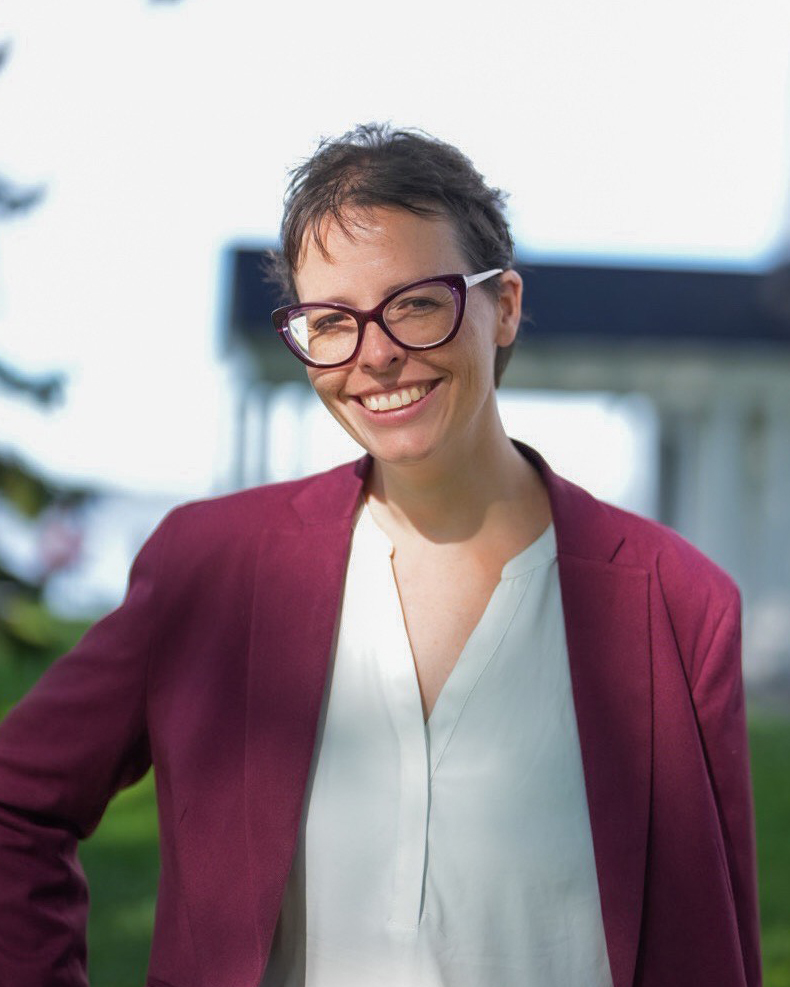
Alex Corrigan
Attorney; social worker; mom
 Democrat
 Town of Clayton


Elected Experience
Neenah School Board (2024-present)
Q&A with the Candidate
Why should voters elect you?
I am running because I believe the people of the 55th District deserve a representative who is present, accessible, and focused on the realities of everyday life. Families across our communities are thinking about the cost of groceries, housing, childcare, healthcare, and whether opportunities will be available for the next generation. Those concerns deserve to be heard and taken seriously. I don’t have all the answers, but I am committed to listening, asking questions, and learning from the people who live and work here. My goal is to bring people together, focus on practical solutions, and represent the district with honesty, respect, and accountability. The job is not to serve a party — it is to serve the people of the 55th District.
What is the top issue in your district? How would you address it?
Affordability is the issue that connects many of the concerns I hear across the 55th District. Families are worried about the rising costs of housing, childcare, healthcare, and everyday necessities. As a school board member, I also see how state funding decisions affect local taxpayers and community resources. Addressing affordability requires thoughtful investment, responsible budgeting, and policies that strengthen local communities rather than shifting costs onto families. I believe strong schools, economic opportunity, and responsible stewardship of taxpayer dollars go hand in hand. My approach would be to listen to residents, focus on practical solutions, and make sure state government is responsive to the real needs of the people it serves.
How should Wisconsin government operate differently than in the past?
I think government works better when we stop treating people who disagree with us as enemies. Most people are trying to provide for their families, build a good life, and leave things a little better than they found them. I’d like to see more listening, more transparency, and more focus on solving problems instead of assigning blame. We won’t agree on everything, and that’s okay. But if we can’t even talk to each other, we can’t make good decisions together. Government should be a place where different perspectives are heard and where the focus stays on serving communities rather than serving political parties.
What is your favorite fun Wisconsin history fact?
My favorite Wisconsin history story is the Sovereign State of Winneconne. After the village was accidentally left off the 1967 Wisconsin highway map, residents declared independence, talked about setting up toll booths, and launched a campaign to make sure they were noticed. The story is funny, which is part of why I love it. But what I find most interesting is what happened next. A community that felt ignored found a creative way to make its voice heard, and the conflict was ultimately resolved through comm cation and compromise rather than escalation. It’s a uniquely Wisconsin story — equal parts stubbornness, humor, civic engagement, and problem-solving.

NEW News Lab general election questions
Relevant Experience
I currently serve as clerk of the Neenah Joint School District Board of Education and chair its Policy Committee, where I work on issues ranging from education funding and student services to district policy and governance. I’m an attorney and social worker by training, with experience in criminal defense, child advocacy, immigration and issues involving police use of force. My social work background taught me to understand how systems intersect and how policy decisions affect families in their daily lives. I’m also a longtime community advocate and the daughter of a union electrician and steward.
Wisconsin has a large budget surplus. What should lawmakers prioritize: tax cuts, increased spending on public services, or something else?
I am cautious about calling this a surplus when Wisconsin still has bills we have not adequately paid. We have chronically underfunded public education, including special education, and infrastructure needs that become more expensive the longer we defer them. Those should be priorities. At the same time, we are entering an uncertain economic and revenue environment, so I do not believe we should spend every available dollar or commit ourselves to obligations we may not be able to sustain. We should responsibly pay what we owe, make strategic investments that strengthen Wisconsin's economy and maintain sufficient reserves.
What policies are most important to address Wisconsinites’ concerns about cost of living?
Cost of living is not one issue. It is the accumulation of housing, utilities, childc are, health care, groceries and transportation taking a larger share of family budgets. Wisconsin should strengthen oversight of major utility capital projects so families are not automatically asked to absorb every new cost through higher rates. We also need to expand affordable child care, increase housing supply while protecting existing communities and address health care and prescription drug costs. Finally, wages need to keep pace with what it actually costs to live. I want to focus on policies that lower families' recurring expenses, not just provide temporary relief.
Housing costs have risen in many Wisconsin communities. What role should state government play in creating more affordable housing?
State government should address both the cost and supply of housing. We should examine how large-scale ownership of multiple residential properties affects local markets and whether our tax policies contribute to housing becoming an investment commodity rather than a home. We also need to investigate price gouging and unnecessary cost increases in building materials. But housing policy cannot stop with new construction. Wisconsin needs to address the extraordinary cost of assisted living and long-term care. When older adults cannot afford appropriate care, they may remain in homes longer than they otherwise would, further limiting housing availability for younger families.
What policies would best address Wisconsinites’ concerns about property taxes?
Property tax relief has to address why communities rely so heavily on property taxes in the first place. Wisconsin should revisit the state aid equalization formula for public schools to ensure state funding reflects communities' actual needs and ability to raise revenue locally. We should also examine shared revenue for municipalities so essential local services are not increasingly shifted onto property taxpayers. When state funding fails to keep pace with costs, schools and local governments are forced to cut services or ask residents to pay more. Sustainable property tax relief means creating a fairer balance between state and local funding.
Funding of public education has been an issue and has been tied to property taxes for years. Schools often rely on local referendums for funding staffing, programs and maintenance. What specific changes would you support to the state’s school funding formula and how would you pay for them?
Wisconsin needs a school funding system that is adequate, predictable and fair. I would tie increases in state aid and revenue limits to inflation, provide predictable and sufficient special education funding and revisit formulas that perpetuate historical differences between high and low spending districts. We also need to examine the growing cost of the voucher system and the unequal accountability between publicly funded systems. I would prioritize these commitments within the state budget rather than continuing to accumulate large balances while districts turn to local property taxpayers and repeated referendums to fund basic educational needs.
Should the state direct more funding toward voucher and school-choice programs and what evidence supports your position?
I would not direct additional state funding toward private school vouchers without evidence that doing so produces better educational outcomes. Public dollars should come with public accountability. Schools receiving taxpayer funding should meet comparable standards for transparency, student outcomes, financial oversight and serving students with disabilities. Wisconsin is already asking taxpayers to support two education systems while many public districts rely on referendums to maintain basic services. I support families having educational choices, including public school open enrollment, but expanding voucher funding should require clear evidence that the investment improves outcomes for students.
What steps can the Legislature take to alleviate court backlogs and address the need for more judges, prosecutors and public defenders?
We need to adequately fund judges, prosecutors and public defenders, but we also need to reduce the burden we place on the court system. Too often, law enforcement and courts function as our mental health and substance use treatment systems because appropriate community resources do not exist. Wisconsin should invest in social workers, mental health care, substance use treatment, crisis response and diversion programs that address underlying problems before they become repeated court cases. For cases that belong in court, we need sufficient staffing and resources to move them efficiently while protecting due process and ensuring meaningful access to counsel.
How do you feel about the number of prisons in Wisconsin - should there be more? Less? Why?
Wisconsin does not simply need more or fewer prisons. We need facilities appropriate for the population we have. Aging, outdated prisons should be replaced or closed, and we should reconsider specialized facilities for elderly incarcerated people who increasingly require physical care. Asking corrections officers to serve as caregivers is not an effective use of already limited staff. Chronic understaffing and burnout create dangerous conditions for both officers and incarcerated people. We should adequately staff and modernize our correctional system while using alternatives to incarceration when appropriate. Safe, humane and fiscally responsible corrections policy is not being soft on crime.
How significant an issue is climate change? What would you advocate for related to climate change if elected?
Climate change is a significant challenge that affects our economy, agriculture, infrastructure and quality of life. Environmental policy works best when it is integrated into how we plan communities and use land rather than treated as a separate box to check. Wisconsin should expand renewable energy while protecting productive farmland, including approaches like agrivoltaics that allow agriculture and solar generation to coexist. We should also invest in energy efficiency, resilient infrastructure and clean water while working with farmers, municipalities, utilities and residents. Effective climate policy should reduce emissions while strengthening Wisconsin communities.
Wisconsin’s bipartisan support for a PFAS law to hold polluters accountable and the state's lower maximum contaminant levels for drinking water put it out in front nationally on forever-chemical protections. Some say the best way to prevent PFAS contaminations is to outlaw their use, while others hope to reverse the regulations. How important is this issue? What still needs to be addressed? How should remediation costs be raised?
PFAS contamination is extremely important because clean drinking water is fundamental to public health and contamination can be extraordinarily difficult and expensive to remediate. Wisconsin should focus on preventing additional contamination while continuing to identify and address existing sites. We need to follow the science as treatment and remediation technologies develop rather than weakening protections because cleanup is difficult. Funding should come first from responsible polluters and available settlement and federal funds, not simply be shifted to affected families and local taxpayers. State resources should fill remaining gaps, particularly where no responsible party can be identified or held accountable.
What do you think of the implementation process for the new Medicaid work requirements so far in Wisconsin? What has worked? What could be improved?
I am concerned that Medicaid work requirements function less as an employment policy and more as a paperwork requirement. Many recipients are already working, caregiving or facing significant barriers to employment. Adding another reporting requirement creates another point of contact where someone who is already underresourced can miss a form, deadline or notice and lose health coverage. If the goal is employment, we should invest in removing barriers to work, including child care, transportation, treatment and workforce supports. Implementation should minimize administrative burden and prevent eligible people from losing coverage because they failed to navigate a bureaucratic process.
What do you think about funding the 988 crisis line long-term at the state level?
I strongly support sustainable state funding for the 988 crisis line. A mental health crisis should not automatically become a law enforcement, emergency room or jail issue simply because appropriate resources are unavailable. A reliable crisis line can connect people to help earlier, reduce unnecessary pressure on first responders and emergency departments and help people access the right level of care. But 988 cannot exist in isolation. Wisconsin also needs adequate crisis response teams, treatment options and community mental health services so that when someone reaches out for help, there is somewhere appropriate for them to go.