
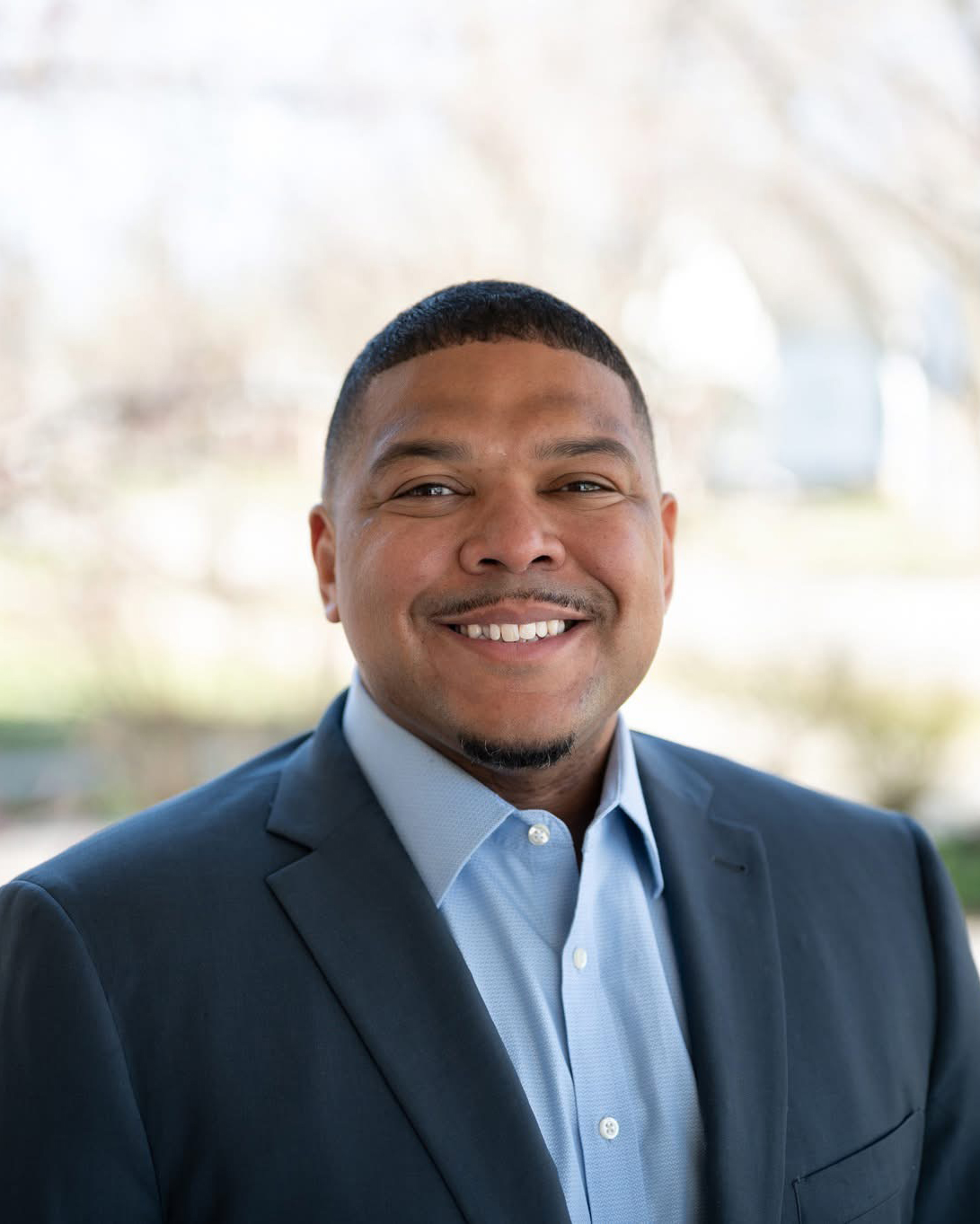
Amaad Rivera-Wagner
State representative
 Democrat
 Green Bay



Elected Experience
Wisconsin State Assembly (2025-present)
Q&A with the Candidate
Why should voters elect you?
Voters should re-elect me because I believe in showing up, listening, and turning community priorities into real results. In my first term, I helped pass bipartisan legislation expanding housing opportunities and to help DACA recipients (Dreamers) get access to local jobs, fought for veterans shelters, safer neighborhoods, stronger schools, consumer protections, and local control. I have held dozens of community conversations and attended hundreds of meetings and events because leadership should be rooted in the people we serve, not politics as usual. My story is Green Bay’s story: working hard, overcoming challenges, and believing government can be a force for good. I will keep choosing progress over politics, community over chaos, and results people can feel in their everyday lives. Green Bay deserves nothing less.
What is the top issue in your district? How would you address it?
My top priority is making government work for the people it serves. Across Green Bay, we see the problem is not that people are not working hard enough. The problem is that the system is not working for them. Homeownership, the cornerstone of the American Dream, feels more out of reach than ever. Health care decisions are being made by unaccountable companies instead of patients and their doctors. Property taxes keep rising while the state legislature refuses to act. I am running to change that. I will keep fighting to expand housing access, raise the minimum wage, hold health insurance companies accountable, fully fund our schools and regulate AI and data centers so our communities, workers, and families are protected. Government should make life better.
How should Wisconsin government operate differently than in the past?
Wisconsin government should look more like our communities and less like the chaos and cruelty of Washington, D.C. I was elected after the most gerrymandered maps in the country were overturned, and we have already seen what becomes possible: new coalitions, new policies, and bipartisan progress on housing and immigration. But to truly change the system, we need leaders who center our communities, not petty politics, extremism and conspiracy theories. I am proud that I am not just talking about that, I am doing it: holding more than 30 town halls and roundtables, attending over 500 community meetings, and passing bipartisan legislation that improves people’s lives.
What is your favorite fun Wisconsin history fact?
My favorite Wisconsin history fact is that our state has so often been first in the nation at showing how government can be a force for good. Wisconsin helped lead the way on unemployment insurance, workers’ compensation, public sector unions, women’s voting rights, Earth Day, and the first statewide protections for LGBTQ people. That is what our state motto, “Forward,” really means to me. It is not just a slogan. It is a responsibility. I am proud to fight for a future rooted in that legacy: one where government protects people, expands opportunity, and helps communities thrive. With your support for re-election, we will continue to move Wisconsin forward, together.

NEW News Lab general election questions
Relevant Experience
State representative for Assembly District 90: helped pass two bipartisan laws expanding homeownership and professional licensing for DACA recipients, hosted more than 30 town halls, and advanced bipartisan legislation combating predatory lending; served as chief of staff to Green Bay Mayor Eric Genrich; worked at federal and state levels on municipal and housing policy. Currently serves on the NeighborWorks Green Bay and Stadium District boards.
Wisconsin has a large budget surplus. What should lawmakers prioritize: tax cuts, increased spending on public services, or something else?
For decades, the state has underfunded our schools and public safety, leaving property taxpayers to pick up the bill. Even after increasing special education funding, the state still does not cover the full cost, and two-thirds of Wisconsin school districts have gone to referendum in three years. It is time for the state to pay its fair share. I would use the surplus to fully fund special education and ensure shared revenue keeps pace with inflation. One-time tax payments may sound good, but structural investments that reduce property taxes are more fiscally responsible and lower costs for Wisconsin families.
What policies are most important to address Wisconsinites’ concerns about cost of living?
People are working harder and are more productive than ever, yet too many still cannot make ends meet. That is a system failing working families. The minimum wage is still $7.25, unchanged for more than 17 years, while the average first-time homebuyer is now 40. Things hard work once put within reach now feel impossible. I have introduced legislation to raise wages, strengthen workers’ rights, hold health insurers accountable and make housing more affordable. With the support of people across the 90th District, I will keep fighting for an economy where hard work actually pays off.
Housing costs have risen in many Wisconsin communities. What role should state government play in creating more affordable housing?
Housing is personal to me. My family experienced homelessness before Habitat for Humanity helped us build the home my mother still lives in today. That stability changed our lives. State government should help more families have that opportunity by building more housing, eliminating duplicative barriers that drive up costs and making homeownership more accessible. I helped pass a bipartisan law creating zero-interest workforce home loans that can save eligible first-time homebuyers up to $270 a month, and advanced bipartisan legislation to cut housing red tape. We can build more housing while helping working families afford a place to call home.
What policies would best address Wisconsinites’ concerns about property taxes?
Property taxpayers are being asked to cover costs the state should be paying. Wisconsin requires strong public schools, police, fire and EMS, but too often fails to fund them adequately, leaving communities to fill the gap. No other entity gets to mandate a service and then refuse to pay its fair share. I introduced legislation to increase state support for public schools and reduce property taxes by as much as 44%, while reforming shared revenue so communities can fund public safety without continually raising local taxes. Real property tax relief starts with the state paying its bills.
Funding of public education has been an issue and has been tied to property taxes for years. Schools often rely on local referendums for funding staffing, programs and maintenance. What specific changes would you support to the state’s school funding formula and how would you pay for them?
Wisconsin should fully fund public education instead of forcing communities to repeatedly raise property taxes through referendums. I support fully funding special education, indexing per-pupil aid to inflation, and restructuring the formula to better reflect what it actually costs to educate every child. I am also open to funding public schools without relying on property taxes at all. We can pay for it by prioritizing public schools in the state budget, legalizing and taxing cannabis and redirecting state dollars currently going to private school voucher programs. Every child deserves a great public school, regardless of ZIP code or property values.
Should the state direct more funding toward voucher and school-choice programs and what evidence supports your position?
No. I led the effort for Green Bay to become the first Wisconsin municipality to show on property tax bills the nearly $10 million local taxpayers were already paying for private-school vouchers. Public schools must serve every child, including students with disabilities and English learners, while voucher schools operate under different requirements and are not required to provide the same special education services. If public dollars are being spent, taxpayers deserve transparency, accountability and equal obligations. I would prioritize fully funding public schools before sending more taxpayer dollars to a separate private system held to different standards.
What steps can the Legislature take to alleviate court backlogs and address the need for more judges, prosecutors and public defenders?
Justice delayed is justice denied, whether you are a victim waiting for accountability or someone waiting for their day in court. Wisconsin needs to invest in the entire justice system, not just one piece of it. That means enough judges, prosecutors, public defenders and court staff to keep cases moving fairly and efficiently. I support using workload data to add resources where they are needed most, improving recruitment and retention and expanding access to attorneys in underserved communities. A justice system only works when every part of it has the people and resources necessary to do the job.
How do you feel about the number of prisons in Wisconsin - should there be more? Less? Why?
Wisconsin does not need more prisons. Nearly half of our local jail population is being held pretrial, while proven alternatives can produce better outcomes. Brown County’s treatment courts report a five-year recidivism rate of about 37%, compared with roughly 65% for the high-risk populations they serve. We should invest in rehabilitation, earlier intervention, treatment and clearing court backlogs rather than simply building more cells. Public safety is not measured by how many prisons we build, but by whether fewer people commit crimes, fewer victims are created and fewer people return to the justice system.
How significant an issue is climate change? What would you advocate for related to climate change if elected?
Climate change is real, and it deserves the urgency the science demands. We have a responsibility to leave the world better than we found it. I helped create Green Bay’s Conservation Corps, the first municipally-run program of its kind in Wisconsin, and our community came together to protect it from federal cuts. I have also been recognized by Wisconsin Conservation Voters for my conservation record. I will keep fighting for clean water, clean energy and strong guardrails on data centers so corporations cannot strain our natural resources while receiving public subsidies. Protecting our environment is protecting our future
Wisconsin’s bipartisan support for a PFAS law to hold polluters accountable and the state's lower maximum contaminant levels for drinking water put it out in front nationally on forever-chemical protections. Some say the best way to prevent PFAS contaminations is to outlaw their use, while others hope to reverse the regulations. How important is this issue? What still needs to be addressed? How should remediation costs be raised?
PFAS is a serious public health threat, and we should be working toward eliminating its use. Wisconsin has made bipartisan progress, but passing a law cannot be the end of the work. We need to actually implement the standards, get remediation dollars to communities quickly and stop political delays from slowing cleanup. I support holding polluters responsible for contamination costs while protecting innocent homeowners, municipalities and water systems from carrying the burden. We should also prevent future contamination by phasing out PFAS wherever safer alternatives exist. Clean water should never depend on your ZIP code or who can afford cleanup.
What do you think of the implementation process for the new Medicaid work requirements so far in Wisconsin? What has worked? What could be improved?
Wisconsin is being forced to implement federal work requirements that put 63,000 adults at immediate risk of losing health coverage and cost state taxpayers $72 million a year. Meanwhile, the same federal law delivers roughly $1 trillion in tax cuts to the wealthiest 1% over the next decade while cutting Medicaid by about $930 billion. That should upset all of us. Accountability cannot depend on your income. Wisconsin should minimize the harm, simplify reporting, make exemptions automatic and ensure paperwork never becomes the reason an eligible person loses health care.
What do you think about funding the 988 crisis line long-term at the state level?
Yes. Wisconsin should provide stable, long-term funding for 988. In 2024 alone, Wisconsin’s 988 counselors answered about 80,000 calls, helping people through crisis before many situations required police, an emergency room or a jail cell. That is exactly the kind of early intervention we should invest in. We cannot keep asking law enforcement to carry the weight of an underfunded mental health system. Reliable state funding for 988 would strengthen public safety, connect people to care sooner and ensure someone in crisis can reach a trained professional when they need help most.