
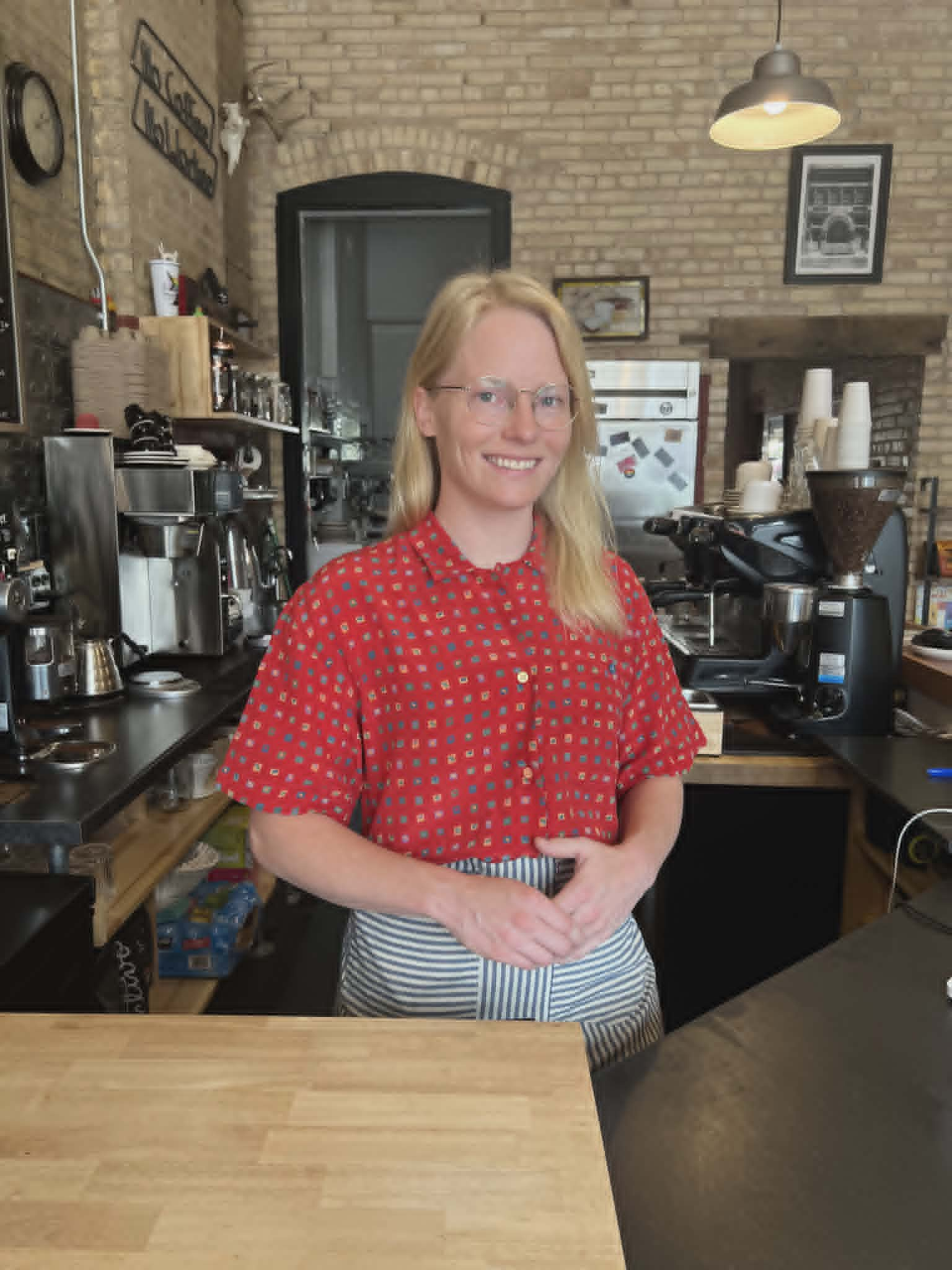
Grace Abitz
Self-employed
 Democrat
 Hortonville


Elected Experience
Hortonville Village Board (2023-2025)
Q&A with the Candidate
Why should voters elect you?
I will be bold in speaking up for Assembly District 56. I want to introduce legislation that impacts people in a positive way. I want people to be empowered by their local and state government.
What is the top issue in your district? How would you address it?
Public education funding and special education reimbursement rates are front of mind for the Hortonville Area School District. When we best serve students in public education, we are investing directly in kids and a more secure future for all. Legislators need to pass a budget that meets the needs of public education across the state.
How should Wisconsin government operate differently than in the past?
There should be term limits on majority speakers.
What is your favorite fun Wisconsin history fact?
Snowmobiles were invented in by Carl Eliason in Sayner, Wisconsin, in 1917.

NEW News Lab general election questions
Relevant Experience
I've paid close attention to local issues since 2022. I attended proactive meetings in Greenville to recommend a moratorium on data center development. I attended meetings on the proposed Comenius Academy on School Road in Greenville, a $131 million start-up project. I spoke up on the shortsightedness and local infrastructure implications of said start-up. I served as a trustee on the Hortonville Village Board from 2023-2025. I spoke up on behalf of residents' safety, business owners' wallets and put their concerns on the bi-monthly agendas.
Wisconsin has a large budget surplus. What should lawmakers prioritize: tax cuts, increased spending on public services, or something else?
Lawmakers need to fully fund public education. Multi-millionaires must contribute their fair share to Wisconsin's future. Municipalities suffered from stagnant and decreasing shared revenue for 20 years, it was frozen from 2003-2023. Cities, towns and villages are left catching up/burdening property owners with tax increases as the state ignored and delayed critical municipal funding for infrastructure and services. Tax cuts favor the rich, their wealth compounds. The working class foots the bill on critical funding for public education, health care and local infrastructure without a chance of getting ahead.
What policies are most important to address Wisconsinites’ concerns about cost of living?
Basic utilities are increasingly unaffordable. Let's enact policy that helps people living in older, less energy-efficient homes. Let's put a 2% of income rate cap on utility bills in Wisconsin to stave off We Energies rate increases to satisfy their shareholders. Shifting for-profit energy to a public service is more equitable for residents, allowing them to get ahead. For example, New London Utilities is regulated by the Public Service Commission and provides their community with affordable energy. Their rates are 9 cents/kilowatt vs. We Energies 19 cents/kilowatt.
Housing costs have risen in many Wisconsin communities. What role should state government play in creating more affordable housing?
Where data centers can be ramrodded into a community, I believe the same intensity could be applied to housing developments. Wherever a proposed data center is being considered, housing developments should also be considered. They can be added to the existing grid while also paying property tax. Whereas data centers won't be increasing the tax base in whatever communities they eye up. Shift that enthusiasm for development into union built homes. The average age of a homebuyer is 40 right now. We can change that narrative with leadership that chooses to prioritize working class people.
What policies would best address Wisconsinites’ concerns about property taxes?
Policy was introduced in December 2025 by District 19 Assembly Rep. Ryan Clancy called the Funding Fairness Package. It is designed to address public education funding and decrease property taxes. The onus of funding public education is transferred to the highest earning individuals and corporations in Wisconsin. As public schools are chronically underfunded and forced to go to referendum, the current onus is on local property owners to fill in the gap of funding. With the Funding Fairness Package, an average property tax bill would decrease by 44% with this package while fully funding public education. Incredible.
Funding of public education has been an issue and has been tied to property taxes for years. Schools often rely on local referendums for funding staffing, programs and maintenance. What specific changes would you support to the state’s school funding formula and how would you pay for them?
Fully funded public education is a direct investment in the future of Wisconsin. We need to pass policy like the Funding Fairness package to alleviate property taxes paid by working class people. Special education reimbursement rates need to be at 90%, legislators should demand the highest degree of care for our next generation. Overturn Act 10 and attract educators back into Wisconsin. Be intentional with investing in working class Wisconsinites. Tax cuts for the ultra wealthy are hurting the vast majority of us.
Should the state direct more funding toward voucher and school-choice programs and what evidence supports your position?
The state should not increase funding to vouchers and school-choice programs for three reasons. There are no testing requirements on schools receiving vouchers. The state is unable to track academic performance. There is a one-time application process for approval, any change in economic status is not factored into voucher recipients. Schools receiving vouchers are not required to serve all students, they are able to deny admission of kids for any reason, including needing extra support.
What steps can the Legislature take to alleviate court backlogs and address the need for more judges, prosecutors and public defenders?
The Justice for All Act was introduced in Wisconsin Legislature in 2026. The bill is waiting to be passed in the Legislature. It would prioritize the hiring of judges, prosecutors and public defenders. Relationships with county courthouses are important to best understand their operational needs. Treating the root of the issue includes using public tax dollars for systems that produce thriving individuals, families and safety nets for the most vulnerable. Preventative care is typically the most cost effective in many avenues of society. The number of court cases will be alleviated.
How do you feel about the number of prisons in Wisconsin - should there be more? Less? Why?
I would prioritize reducing the number of prisons in Wisconsin in tandem with criminal reform. We need to treat the real problem and invest in communities, public schools, social frameworks and examine how come people are in desperate situations. Neglected environments produces desperate outcomes and unpredictable behavior. The symptoms of systemic neglect will never go away. Working class people are one accident or life event away from homelessness. Government currently exists to serve a minority of wealthy people and corporations. We need to prioritize working class people, legalize marijuana and decriminalize marijuana possessions.
How significant an issue is climate change? What would you advocate for related to climate change if elected?
I would advocate for scheduled roundtable discussions. Community stakeholders, architects, climate experts, property owners, anyone is welcome at the table to talk about what adapting to severe weather looks like on a year-to-year basis. I would design systems to help people who are displaced by weather events. Failing to prepare is preparing to fail.
Wisconsin’s bipartisan support for a PFAS law to hold polluters accountable and the state's lower maximum contaminant levels for drinking water put it out in front nationally on forever-chemical protections. Some say the best way to prevent PFAS contaminations is to outlaw their use, while others hope to reverse the regulations. How important is this issue? What still needs to be addressed? How should remediation costs be raised?
I want to see PFAS and microplastics regulated out of our environment and drinking water. What a harmful combination to our reproductive health and health in general. The companies creating PFAS will be held accountable for costs of remediation.
What do you think of the implementation process for the new Medicaid work requirements so far in Wisconsin? What has worked? What could be improved?
Programs that use our tax dollars should be scrutinized and audited. Historically, applying for Medicaid is a stringent process. The federal Medicaid cuts will result in $16 billion of funding loss over 10 years in Wisconsin. This will ultimately cost Wisconsinites $7 billion in out-of-pocket costs.
What do you think about funding the 988 crisis line long-term at the state level?
The 988 crisis line should absolutely receive long-term funding. Better yet, let's invest in our local municipalities, state health care options, public education, veteran programs and more so that families in Wisconsin can thrive instead of survive. The 988 crisis line is a symptom of complex societal decline, we need to treat the root of the issue.